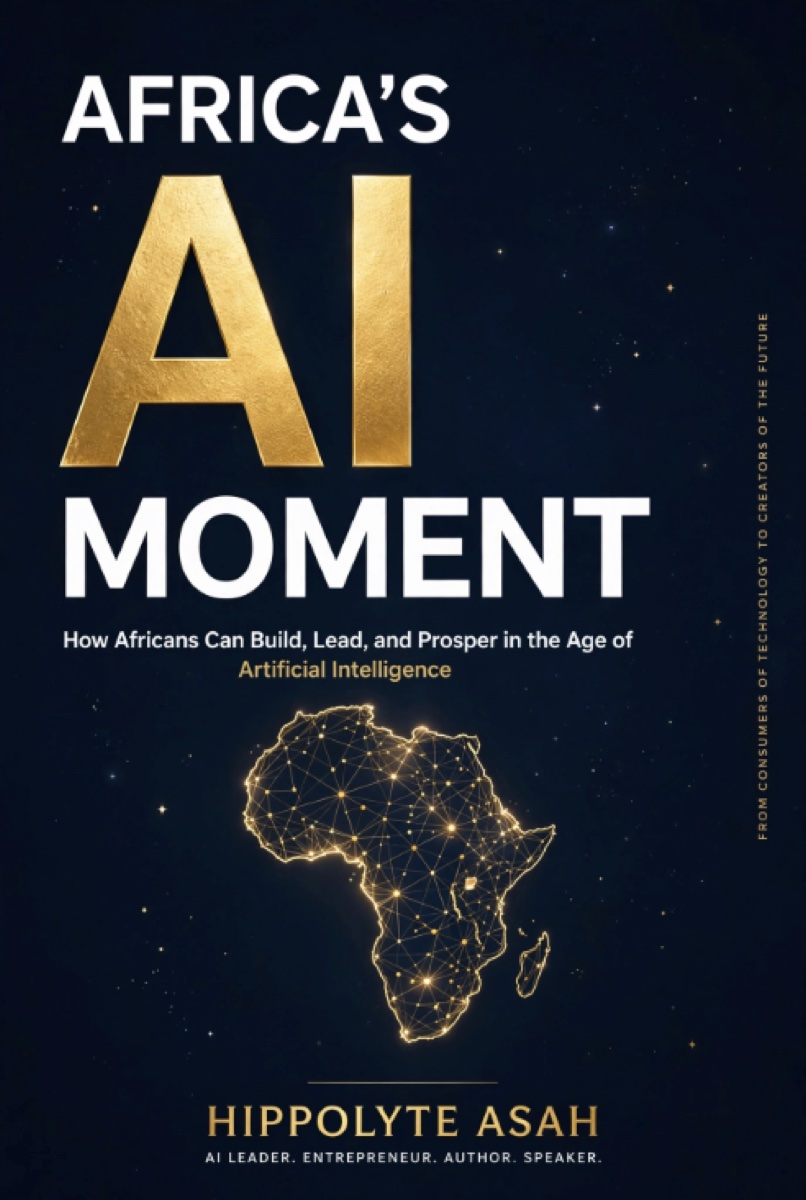
ComingFall 2026
Front cover of Africa's AI Moment by Hippolyte Asah
The new book by Hippolyte Asah

Africa cannot afford to enter the age of artificial intelligence only as a consumer.

Africa's AI Moment: From Consumers of Technology to Creators of the Future

By Hippolyte Asah — Toronto-based AI leader, entrepreneur, founder of JobsAI, and host of The Smart Office Podcast.

Available in paperback, ebook, and bulk orders for universities & organizations.

The Audit
Section 01 — The Gap

The audit nobody
is talking about.

In August 2026, I measured 10 African economies against all seven G7 nations using the IMF AI Preparedness Index and the Stanford HAI 2026 AI Index. The numbers are not close.

G7 average
0.72
IMF AI Preparedness Index
Sub-Saharan Africa
0.34
Less than half the G7 score
Best in Africa — South Africa
0.50
Still behind Italy, the lowest G7 nation (0.62)
US private AI investment, 2025
$285.9B
Plus 5,427 data centers and ~90% of frontier models
Digital infrastructure score
Out of 100. The foundation everything else is built on.
G772
Africa34

Sources: IMF AI Preparedness Index; Stanford HAI Artificial Intelligence Index Report 2026. Full methodology in the Bonus Report · every figure with its source.

This isn't just an AI gap. It's about to become an income gap.

Interactive — 54 African countries · 7 G7 nations · Oxford Insights 2025

Check your country's
AI readiness gap.

Pick a country. See where it stands on policy, infrastructure, governance and AI development — against the G7 and African averages — and how its rank moved from 2024 to 2025. Data: Oxford Insights Government AI Readiness Index 2025 (195 countries, 69 indicators, published January 2026). Sub-Saharan Africa averages 29.1 — last of nine world regions — against North America's 81.5: a 52-point gap. The book's full audit goes deeper.

AAIM · AI READINESS TERMINAL · OXFORD INSIGHTS 2025 · SCALE 0–1 Live
SELECT A COUNTRYor try Kenya · Nigeria · Ghana · South Africa
Section 02 — Inside the book

The BUILD Framework.

This isn't a book about what AI will do to Africa. It's about what Africans will build with it — five pillars, one strategy.

01
B

Build African Capability

Skills, research, institutions, and datasets in African languages.

02
U

Use AI to Solve African Problems

Education, healthcare, agriculture, and jobs — not just chatbots.

03
I

Invest in African Innovation

Capital, compute, data centers, and the infrastructure underneath.

04
L

Lead Responsibly

Governance, ethics, data sovereignty, and policy that protects.

05
D

Develop African Ownership

IP, companies, platforms, and customer relationships that stay.

17Chapters

From education to agriculture, AI sovereignty, jobs, and entrepreneurship — and what the diaspora can remit beyond money: knowledge, networks, and capital.

Section 03 — Who it's for

Written for the people
who will decide.

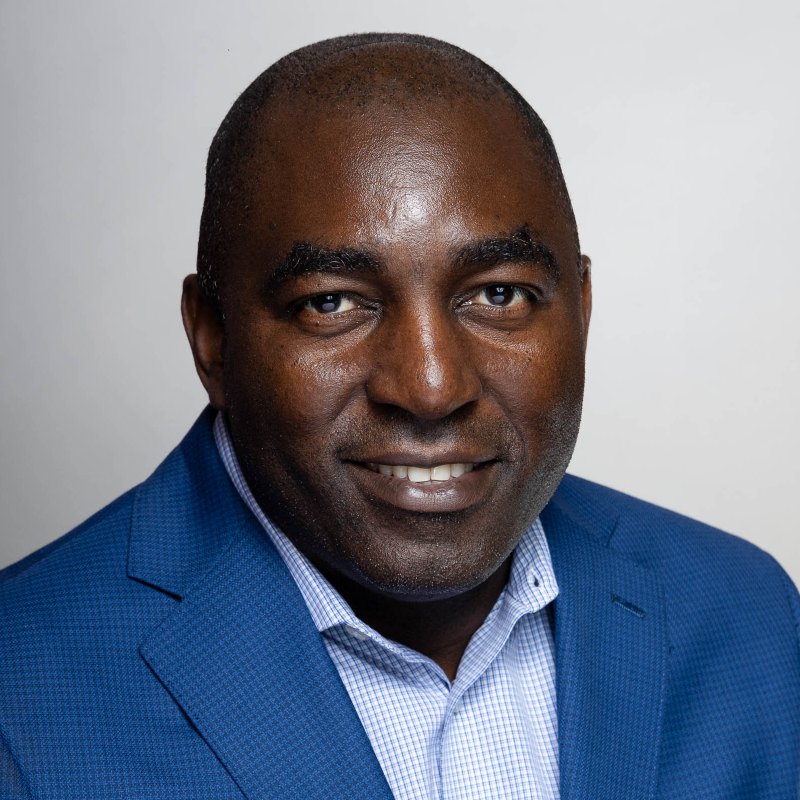
Hippolyte Asah
Section 04 — About the author

Hippolyte Asah

AI Leader · Entrepreneur · Author · Speaker

Toronto-based technology professional with nearly two decades in software architecture, cloud, DevOps, and AI. Founder of JobsAI — AI platforms for employment and workforce productivity. Host of The Smart Office Podcast on Spotify, YouTube, iHeartRadio, and Amazon Music.

An African living in the diaspora, he wrote this book from one conviction: Africa should not merely consume the technologies shaping the future — it should help build, govern, and own them.

Speaking & institutional engagements

Keynotes, executive AI training, university lectures, and government briefings.

Book Hippolyte
Section 05 — From the book

In Hippolyte's words.

The continent possesses extraordinary potential. But potential is not preparedness. Access is not capability. Capability is not ownership. And ownership does not happen by accident.Chapter 1 — Africa's AI Moment
Africa does not need to win the race to build the world's largest foundation models. It does need to ensure that its people and businesses are not relegated to being permanent renters of foreign intelligence, foreign compute, and foreign digital infrastructure.Bonus Report — Conclusion
Previous technologies extended what human beings could do with their bodies, machines, or physical infrastructure. AI extends what individuals and organizations can do with information, language, analysis, prediction, creativity, and decision-making. It is becoming a layer of intelligence embedded across the economy itself.Chapter 1 — The Moment Has Arrived
For Hippolyte, the question is not simply what artificial intelligence will do to Africa. It is what Africans will choose to build with it.About the Author

Advance reader reviews will appear here as they arrive. Reviewing for a publication or institution? Request a review copy.

Africa's future in the age of AI is not yet written.

The question is: who will write it?
Waitlist Free Report